INDEPENDENT PRODUCT REVIEW
VisiFlora Review
A clear, editorial look at product information, ingredients, price options and considerations.

You’re Watching Your Vision Fade, One Screen at a Time. Here’s What the Eye-Care Industry Won’t Tell You.
FTC Disclosure: This article contains affiliate links. If you purchase through these links, we may earn a commission at no extra cost to you.

What’s Really Happening to Your Eyes?
Open your phone right now. Swipe to your screen-time report.
Now look in a mirror — really look. Red-rimmed eyes. A faint tightness behind your brow. The dull throb that settles in around four in the afternoon and doesn’t lift until you close the laptop.
You hold your phone a little further away than you used to. You squint at text that once came into focus without thinking. You blink hard, you rub your eyes, you reach for the drops — again.
You tell yourself it’s just “screen fatigue.” That it’ll pass. That everyone feels this way.
It doesn’t pass. And everyone feeling it doesn’t make it normal.
The Screen Deception: Modern Life’s Quietest Epidemic
Somewhere along the way, we accepted something extraordinary without a second thought: that a human being can stare at a glowing rectangle for ten, twelve, fourteen hours a day and walk away unscathed.
We were never built for this.
Our eyes evolved for hunting, gathering, scanning a horizon — for shifting focus between near and far, for natural light and genuine darkness. Today we give them something else entirely: hours of close, fixed focus on a bright screen, a dramatically reduced blink rate, artificial light long after sunset, and a near-total absence of the far-distance looking that keeps the focusing system supple.
And what does the industry offer in return? Glasses with a coating. Drops that sting. “Just take breaks.” Rest your eyes, they say — as if rest alone can undo a lifetime of a new kind of strain our bodies never anticipated.
Here’s the part nobody emphasizes: your eyes are not an isolated pair of cameras bolted to the front of your skull. They are living tissue, wired into the rest of your body — fed by your circulation, affected by your inflammation, and increasingly understood to be connected to the health of your gut. Vision is a whole-body system. Treat it like an isolated problem, and you’ll keep chasing symptoms forever.

What Happens to Your Eyes Over Time
Let’s be honest about where this road leads — because it doesn’t plateau.
The strain compounds. Every evening you push through tired eyes, you’re reinforcing a pattern. The focusing muscles fatigue. The tear film gets thinner. The discomfort that used to hit at hour eight starts showing up at hour five, then hour three.
Your “quick fixes” quietly become permanent fixtures. First it’s a pair of cheap computer glasses. Then a stronger prescription. Then the drops become a daily habit, then twice daily. Then the headaches, the squinting, the held-at-arm’s-length phone — and suddenly your optometrist is having a more serious conversation with you than either of you expected.
The numbers tell the story better than the symptoms. Computer/blue-light glasses: $50 to $300. A quality pair of prescription lenses: $200 to $600, replaced as your prescription keeps shifting. Premium eye exams with retinal imaging: $150 to $300 a visit. And if you ever head down the corrective-surgery path, LASIK can run $2,000 to $4,000 or more per eye.
That’s the quiet tax of ignoring the root cause. You pay to manage a symptom while the underlying strain — and the nutrient gap that feeds it — goes unaddressed.
The Solution: Nourish Your Vision From the Inside Out
There’s a different way to think about this — and it has nothing to do with another pair of glasses.
What if the real question isn’t “which screen is hurting me,” but “what am I not giving my eyes?”
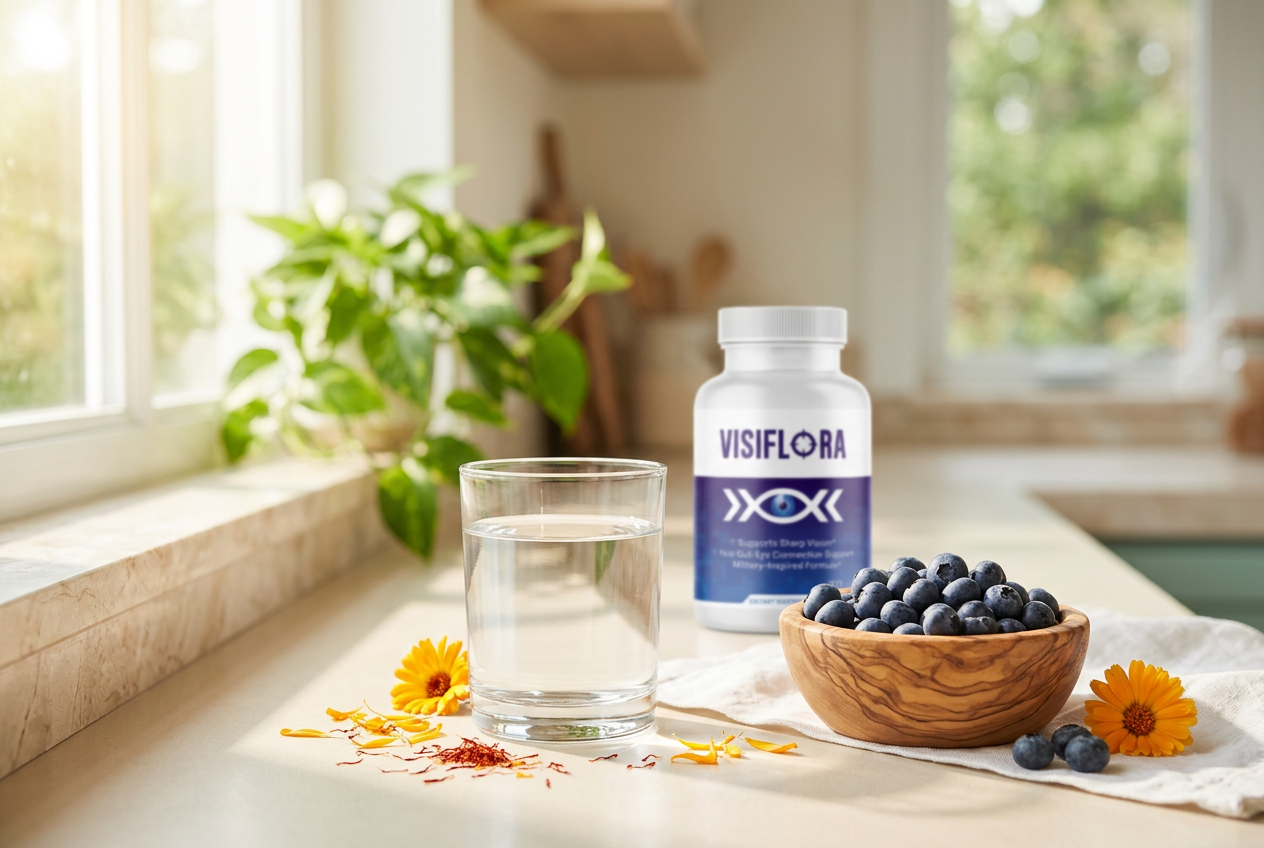
Modern eye care tends to treat the eyeball as a standalone object. But a growing body of research points somewhere deeper: the gut-eye connection. Your gut, your inflammation levels, and the nutrients you actually absorb all feed the delicate tissues of the retina, the macula, the optic nerve — the very structures that decide how clearly you see tonight, and in twenty years.
VisiFlora’s own positioning centers on one specific mechanism: LPS toxins. Lipopolysaccharides are bacterial fragments that can leak through a weakened gut barrier into circulation, where the vendor argues they contribute to hidden, low-grade inflammation that stresses the eyes. The formula’s stated goal is to help neutralize that LPS-driven stress while reinforcing the gut barrier itself — an “inside-out” approach that generic eye vitamins don’t address.
That’s the idea behind VisiFlora.
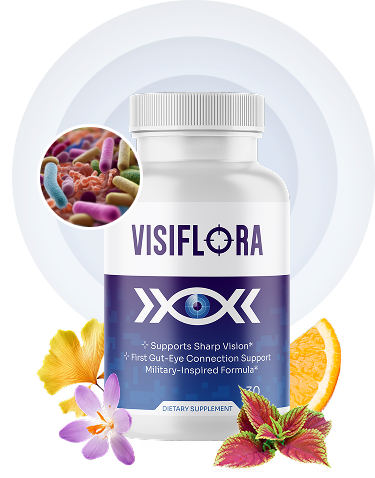
VisiFlora is not eye drops. It’s not a pair of glasses. It’s a 22-in-1 vision support supplement built around the gut-eye connection — a daily formula positioned to support eye comfort, clarity, resilience, and the health of the retina, optic nerve, and macula, with an emphasis on night vision.
How It Works
The formula brings together vitamins, minerals, carotenoids, and botanicals in a single daily routine — one capsule a day, taken with food. Rather than chasing one symptom, it targets the support your eyes need across the board — from the antioxidant carotenoids that concentrate in the macula, to the minerals involved in countless bodily functions, to botanicals with a long folk history of use in eye support.
The vendor organizes its 22 ingredients into four functional groups: a Vision Defense Matrix (antioxidants like astaxanthin, vitamin C & E), a Gut-Eye Barrier Complex (grape seed extract, rutin, quercetin, taurine, alpha lipoic acid), Vision Performance Boosters (ginkgo biloba, coleus forskohlii, eyebright), and a Macular & Lens Protection Blend (lutein, zeaxanthin, vitamin A, zinc, bilberry, lycopene, saffron). The formula is non-GMO, stimulant-free and 100% vegan, produced in a facility that follows USDA National Organic Program standards.
| Ingredient | Category & Intended Role |
|---|---|
| Lutein & Zeaxanthin | Carotenoids included for macular support |
| Astaxanthin | Antioxidant carotenoid (marketed with “NASA-researched” framing) |
| Lycopene | Carotenoid antioxidant |
| Vitamin A | Essential vitamin central to normal vision |
| Vitamin C & Vitamin E | Antioxidant vitamins |
| Zinc, Copper, Selenium, Chromium | Trace minerals |
| Bilberry Extract | Botanical tied to the vendor’s WWII-pilot night-vision story |
| Saffron Extract | Botanical extract |
| Grape Seed Extract, Rutin, Quercetin | Plant-derived bioactives |
| Taurine | Amino acid-like compound |
| Alpha Lipoic Acid | Antioxidant compound |
| Ginkgo Biloba | Botanical |
| Coleus Forskohlii | Botanical |
| Eyebright | Traditional eye-support botanical |
Ingredient roles above reflect the vendor’s positioning and general nutritional categories — not verified clinical outcome claims.
The Evidence: What’s Real and What’s Marketing
Let’s be straight about the science, because an honest review separates the two.
VisiFlora’s landing page leans on some attention-grabbing references — including NASA research on astaxanthin and the story of WWII pilots using bilberry for night vision. These are compelling stories, but they are marketing references cited by the vendor, not studies we can independently verify or vouch for here. We mention them so you know exactly what you’re being sold — and we encourage you to treat them as positioning, not as peer-reviewed proof.
What is genuinely true: the gut-eye connection is a real and emerging area of research, and the specific ingredients in this formula — lutein, zeaxanthin, astaxanthin, and others — are legitimate, widely studied nutrients with long histories in the vision-support space. That doesn’t mean VisiFlora will “restore” anyone’s vision, and no responsible review should claim that. It means the formula is built around a credible nutritional framework, not a gimmick.
This is a support and maintenance proposition — not a miracle. Any vendor language implying dramatic restoration should be read with healthy skepticism, this review included.
The Pricing: A Fraction of the Cost of Chasing Symptoms
| Fix | Typical Cost |
|---|---|
| Computer / blue-light glasses | $50–$300 |
| Prescription lenses | $200–$600 |
| Premium eye exam with imaging | $150–$300 |
| LASIK (per eye) | $2,000–$4,000+ |
VisiFlora is sold in three packages through its official website:
- 2 bottles: $79 per bottle ($158 total)
- 3 bottles: $59 per bottle ($177 total)
- 6 bottles: $49 per bottle ($294 total)
Every order is backed by a 60-day money-back guarantee. The 6-bottle package also includes three bonus ebooks — a combined $200+ value, free: The Military Vision Protection Manual (eye techniques used by elite pilots), The Gut-Eye Healing Protocol (a 7-day gut reset with 21 recipes), and The 48-Hour Vision Jump-Start (immediate tips for dry eyes, floaters and light sensitivity). Put that next to the cost of managing symptoms year after year, and the economics are hard to argue with.
Final Verdict
You can keep buying stronger glasses and more eye drops and treating the symptoms. Or you can start asking whether your eyes are getting what they actually need to hold up under modern life.
VisiFlora isn’t a magic cure, and no honest reviewer will tell you it is. What it represents is a different approach: a 22-in-1, gut-eye–focused formula that supports your vision from the inside out, at a price that’s a rounding error next to a lifetime of stronger prescriptions.
The question isn’t whether you can afford to look after your eyes. It’s whether you can afford to keep ignoring them.
Where to Buy VisiFlora
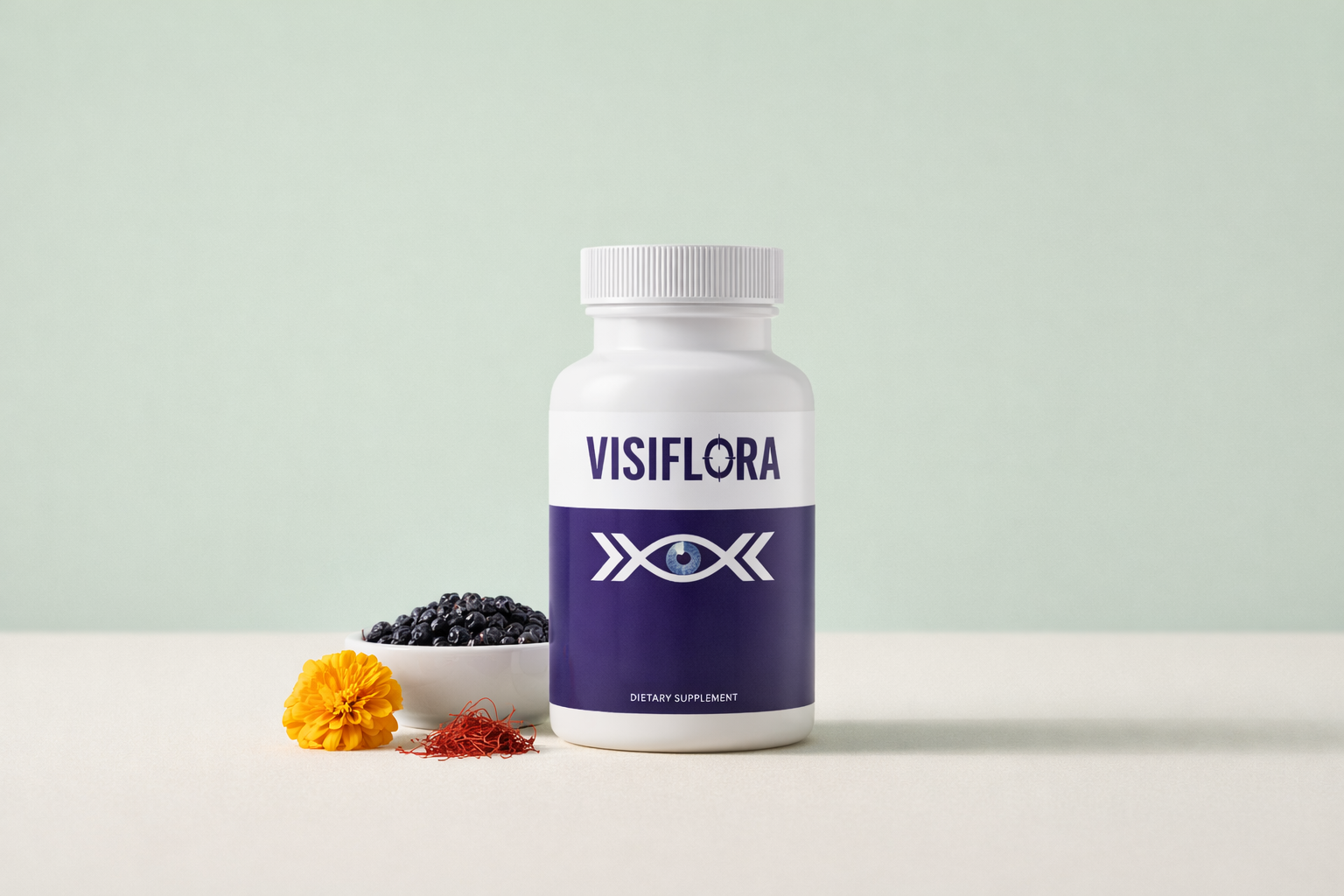
Check the current price and available bonuses on the official website:
Visit the Official VisiFlora Website
Disclosure: This post contains affiliate links. If you click through and make a purchase, we may earn a commission at no additional cost to you. This helps support our editorial work. Our opinions remain our own.
This article is for informational purposes only and is not medical advice. VisiFlora is a dietary supplement and is not intended to diagnose, treat, cure, or prevent any disease. Consult an eye-care professional or healthcare provider before starting any new supplement. Individual results may vary.