INDEPENDENT PRODUCT REVIEW
Phytomem One Review
A clear, editorial look at product information, ingredients, price options and considerations.
Your Memory Fog Isn’t Just “Getting Older.” Here’s What the “Type 3 Diabetes” Theory Says Is Really Going On.
FTC Disclosure: This article contains affiliate links. If you purchase through these links, we may earn a commission at no extra cost to you.

What’s Really Behind the Fog?
Think about the last time it happened. You walked into a room and forgot why you were there. You met someone and their name evaporated the second you heard it. You read the same sentence three times and it still didn’t stick.
You probably told yourself the same thing everyone does: “I’m just getting older.”
You reach for that explanation because it’s comfortable — it asks nothing of you. But here’s the question nobody asks: what if the fog isn’t just a number? What if it’s something specific, something with a mechanism, that you’ve been carrying around for years without ever being told it has a name?
Because there’s another story circulating — one the wellness industry rarely puts front and center — and it reframes the whole problem.
The Plastic Stranglehold: The Theory Your Brain Fog Was Never Explained With
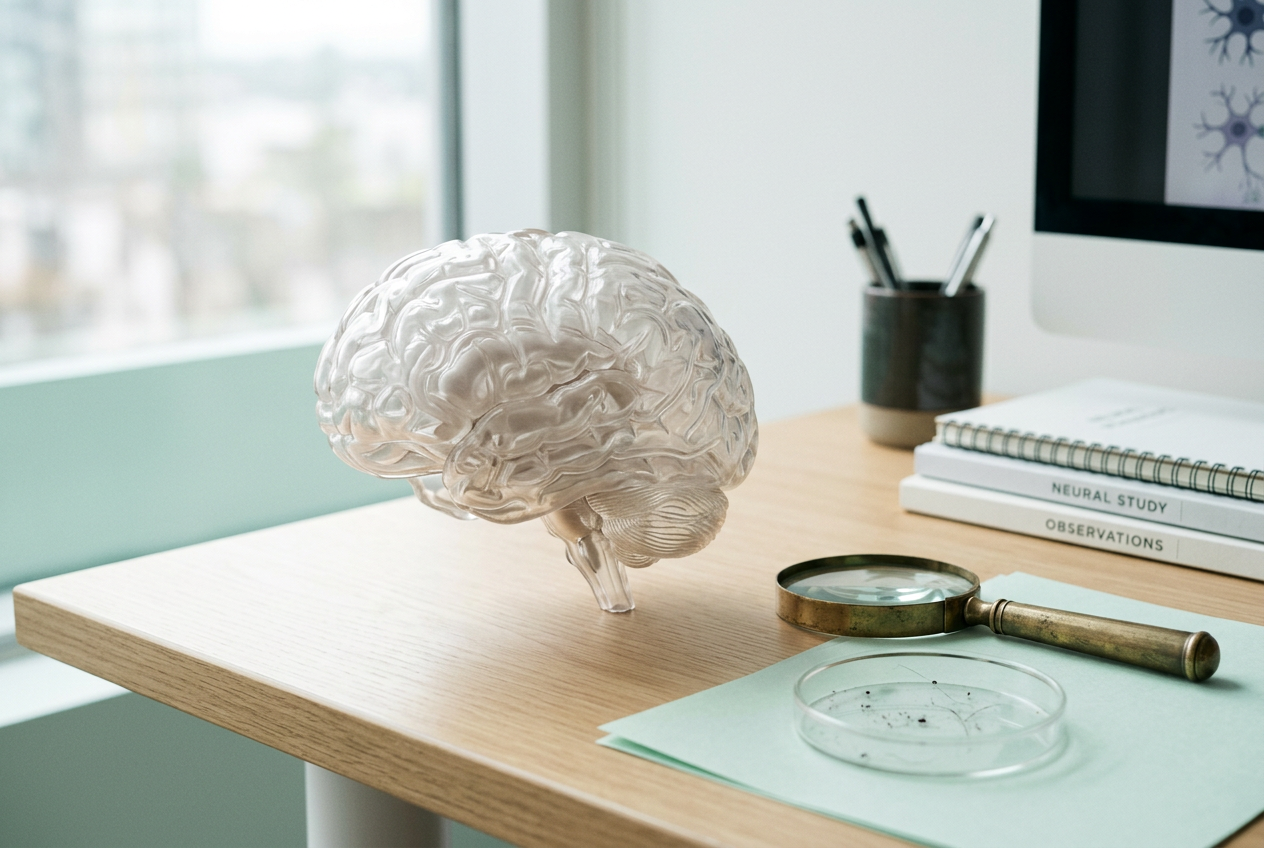
There’s a growing body of conversation around something researchers have nicknamed “Type 3 Diabetes.” The idea is this: the same insulin resistance that defines Type 2 diabetes may also take hold in the brain — quietly starving your neurons of the energy they need to form, store, and retrieve memories.
And wrapped around that idea is a second, more provocative framing — the one the product we’re reviewing calls the “Plastic Stranglehold”: the argument that microscopic plastic particles now circulating in our food, water, and bodies may be contributing to that slow, silent cognitive drain.
Let us be honest with you up front, because that’s the entire point of this review: these are theories and marketing framings, not settled science. We are not telling you microplastics are destroying your memory, and no single pill has been proven to reverse them. What matters is the direction the conversation points:
- Memory decline is increasingly discussed as a metabolic problem, not simply an “aging” problem. Insulin signaling in the brain is a real and active area of scientific research.
- The “it’s just age” story may be incomplete. If the fog has a mechanism, it may also have levers you can actually pull — instead of just a number you’re supposed to accept.
- Most people never hear any of this. The standard advice remains “get more sleep and try a crossword” — while the fog quietly deepens behind the scenes.
You’re not being misled about your memory, exactly. You’re just being handed the comfortable answer instead of the useful one.

What Happens When You Ignore the Fog
Here’s the uncomfortable part: memory fog rarely stays where you found it.
It starts small. Misplaced keys. A forgotten appointment. A word that sits on the tip of your tongue and never lands. Each one is easy to laugh off — classic senior moment — and each one costs you a little more of your own confidence.
Then it compounds. You stop trusting yourself in meetings, so you stop speaking up. You re-read emails three times before sending, so your work slows down. You avoid introducing people because you can’t hold their names — so relationships quietly thin out at the edges. You stop learning new things because your brain feels like a sieve, and the world slowly narrows around you.
And then the cost becomes real. Specialist evaluations. Cognitive assessments. Hours spent hunting for things you just had in your hand. The low-grade anxiety that follows you to bed and wakes you at 3 a.m. with the same loop: is this normal, or is this the beginning of something worse?
None of this has to be dramatic to be expensive. The fog taxes your focus, your confidence, and — in the worst cases — your independence, one small withdrawal at a time. And the price of doing nothing only compounds with every year you let it ride.

The Solution: Support the Brain’s Own Defenses
Here’s the more useful way to think about it: your brain is not a fixed, fading machine. It’s a living system with its own defense and repair mechanisms — mechanisms that depend on the right raw materials showing up every single day.
That’s the idea behind Phytomem One.
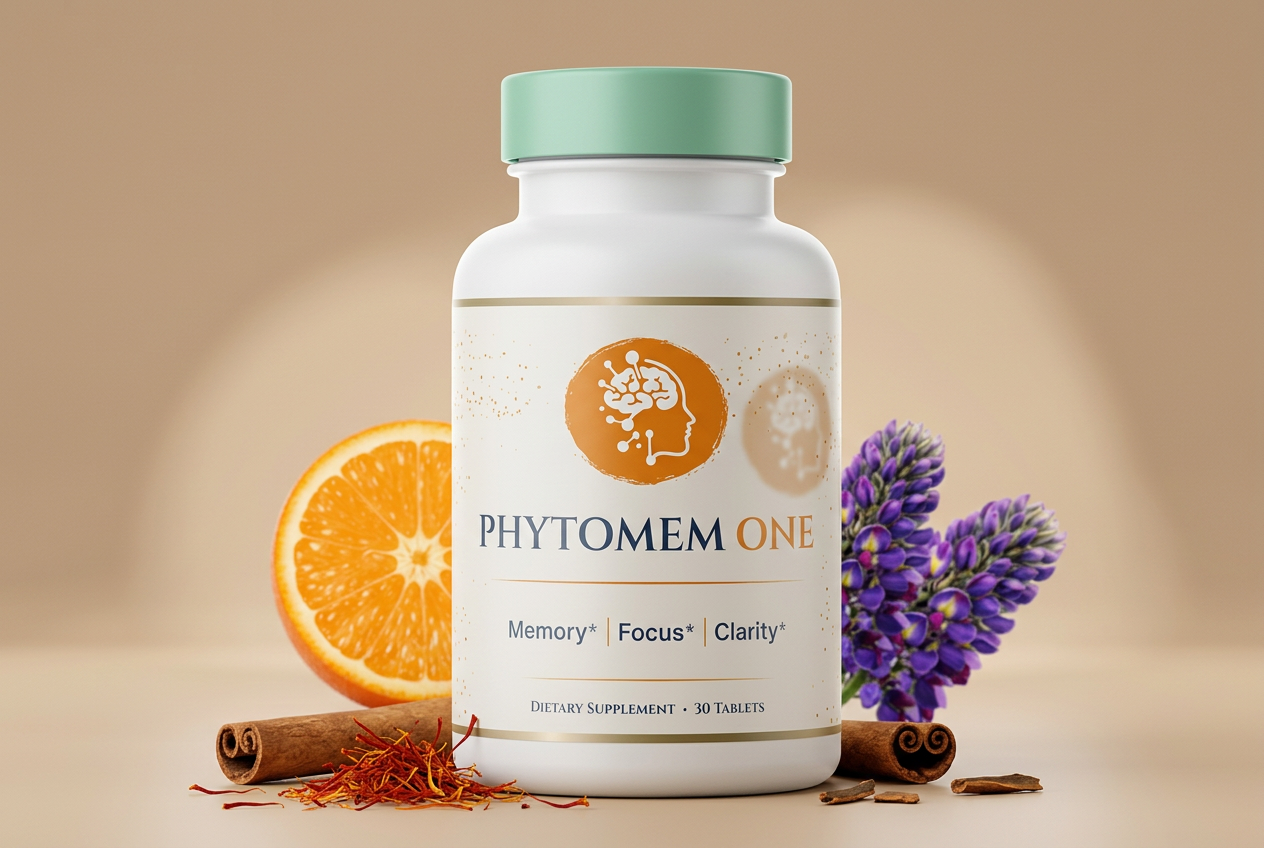
Phytomem One is a brain health and memory support supplement, marketed as a “10-in-1 neuro-essential formula” built around the microplastic-brain connection and the goal of supporting brain insulin sensitivity. It’s sold as a stimulant-free, non-GMO daily supplement aimed at mental clarity, recall, and resilience.
To be clear about what this review can and cannot tell you: Phytomem One is not a cure for anything, and no supplement has been proven to reverse cognitive decline or “clean” microplastics from the brain. What we can do is look at what’s actually in it, what the vendor claims, and what you’d be paying.
How It Works (as the Vendor Describes It)
Each daily serving is a blend of ten ingredients. The table below lists them exactly as they appear on the product’s own page. The “role” column reflects how the vendor describes each ingredient’s purpose — these are marketing descriptions, not claims we have independently verified.
| Ingredient | Role as Marketed by the Vendor |
|---|---|
| Saffron Extract | Positioned for cognitive and mood-related support |
| Fucoxanthin | Marketed around neural growth and brain energy |
| Fucoidan | Marketed around protein clearance in the brain |
| Oleuropein | An olive-leaf compound included for cellular support |
| Berberine HCl | Marketed around metabolic support (AMPK activation) |
| Ceylon Cinnamon Bark | Included for metabolic and blood-sugar support framing |
| Corosolic Acid | Marketed for glucose and insulin support |
| Kudzu Flower Extract | Included among the botanical support ingredients |
| Morosil | A branded blood orange extract included in the blend |
| Xylitol | A sugar alcohol used as a sweetener |

The Science: What’s Real and What’s Framing
Let’s separate the two layers honestly, because that’s the difference between a review and an ad.
What’s well established: These are real, identifiable botanical compounds. Saffron, berberine, fucoxanthin, oleuropein, and Ceylon cinnamon are all substances with existing bodies of scientific literature behind them — much of it in metabolic, antioxidant, and general wellness research. That part is a matter of public record, not marketing.
What’s framing: The specific leap — that this particular ten-ingredient combination “reverses the Plastic Stranglehold” or “treats Type 3 Diabetes” — is a marketing narrative. “Type 3 Diabetes” is an emerging hypothesis, not a formal medical diagnosis. “Plastic Stranglehold” is a coined term, not a clinical classification. We found no independent clinical trial published on Phytomem One itself, and the vendor’s page does not point to one.
None of that makes the product worthless. It makes it a supplement — a stack of plausible, partially-studied ingredients wrapped in a strong story. Your job as a reader is to buy the ingredients and the transparency, not the headline.

The Pricing: A Formula, Not a Subscription Trap
Phytomem One is sold through ClickBank in three package sizes, and the price per bottle drops as the quantity rises:
| Package | Price per Bottle | Total |
|---|---|---|
| 2 bottles | $79 | $158 |
| 3 bottles | $59 | $177 |
| 6 bottles | $49 | $294 |
The larger packages also include three bonus digital guides:
- The Memory Shield Diet
- The 5-Minute Brain Reboot
- The Caregiver’s Survival Guide
Every order is backed by a 60-day money-back guarantee.
Frame it against the problem, and the math is straightforward: a single specialist consultation, or a few months of cognitive-training app subscriptions, can easily cost as much as — or more than — the entire 6-bottle package. Whether it’s worth it for you depends entirely on how the formula sits with you, and that’s exactly what the guarantee is there to let you test.
Final Verdict
Phytomem One is a transparent-enough package: a ten-ingredient botanical formula, honest pricing that rewards larger orders, three genuinely useful-looking bonus guides (the caregiver guide alone addresses a real, under-served need), and a 60-day guarantee that removes most of the downside.
What it is not: a proven cure for memory loss, a microplastic detox, or a medically validated treatment for “Type 3 Diabetes.” Anyone selling you that certainty is selling you a story, not a supplement.
What it is: a considered option for someone who wants to support their brain health with a stimulant-free, plant-based daily formula — and who is willing to read the ingredient list with their eyes open.
The fog may not lift overnight. But a plan always beats a shrug.
Where to Buy Phytomem One
Check the current price and available bonuses on the official website:
Visit the Official Phytomem One Website
Disclosure: This post contains affiliate links. If you click through and make a purchase, we may earn a commission at no additional cost to you. This helps support our editorial work. Our opinions remain our own.
This article is for informational purposes only and is not medical advice. Dietary supplements are not intended to diagnose, treat, cure, or prevent any disease. Consult a qualified healthcare professional before starting any new supplement, especially if you are pregnant, nursing, taking medication, or managing a medical condition. Individual results may vary.