WELLNESS & HEALTH · DR. HERMES, M.D.
Calcarea Phosphorica — Cell Regeneration and the Rebuilding Salt
A source-led Wellness & Health examination of Calcarea Phosphorica in the Schüssler-Carey tradition: its historical materia medica, the clinical plateau cases, and the 6X, 12X and 30X preparations.
What Is Calcarea Phosphorica?
Calcarea Phosphorica — also written Calc. phos. or calcium phosphate — is the second of the twelve tissue salts in Dr. Wilhelm Schüssler’s Biochemic system. It is the most abundant mineral salt in the human body by weight, comprising approximately fifty-seven percent of bone tissue. It is found in the bones, teeth, gastric juices, connective tissue, and in trace amounts in muscle, nerve, and brain cells.
Dr. George W. Carey, writing in the 1894 text The Biochemic System of Medicine, described Calc. phos. as “destined to play a prominent part in the treatment of the sick, when its range is fully understood by medical practitioners.” He characterized it as the salt that “works with albumen, carries it to bone tissue or to any part of the body where it may be needed,” using albumen as a cement to build bone structure.
Modern biochemistry confirms that calcium phosphate — primarily in the form of hydroxyapatite, Ca₁₀(PO₄)₆(OH)₂ — is indeed the essential mineral component of bone and teeth. The Schüssler model, while simplified in its mechanism, correctly identifies the fundamental role of this salt in skeletal health and tissue regeneration.
Discovery in Human Ashes
When human tissue is completely incinerated, the inorganic residue — the ash — contains a substantial proportion of calcium phosphate. Nineteenth-century chemists quantified this: approximately fifty-seven percent of bone ash is calcium phosphate, with the remainder composed of magnesium phosphate, calcium carbonate, sodium chloride, and other trace minerals.
Schüssler recognized that this salt must be present in the blood in sufficient quantity for bone cells to build and repair the skeleton. Carey elaborated: “Without the lime phosphate no bone can be made. When, for any reason, the molecules of this salt fall below the proper standard in the blood, some disturbance in life’s processes occur.”
This insight — that the body cannot build bone without its raw mineral material — was well ahead of its time in the 1870s and anticipated the modern understanding of bone mineralization.

Historical Doctrine: What Schüssler and Carey Taught
In the 19th-century Biochemic system, Calc. phos. was assigned a central role in bone formation, digestion, and tissue repair. Dr. Carey wrote that “phosphate of lime is destined to play a prominent part in the treatment of the sick, when its range is fully understood by medical practitioners.” He described its mechanism directly: “This salt works with albumen, carries it to bone tissue or to any part of the body where it may be needed. It uses albumen as a cement to build up bone structure.”
Carey’s explanation of how a deficiency of this salt produces disease is one of the most vivid passages in the Biochemic literature. He wrote:
“Should the albumen, not having a sufficient quantity of the lime phosphate to properly take care of it, become a disturbing element and be thrown off by the kidney route, the wise (?) men call it Bright’s disease. If through the nasal passages, the condition is named catarrh. If by the lungs, a cough is produced. If the albumen reaches the skin, pimples, eruptions, freckles, a condition called eczema, or perchance sores; if the amount at a given point be large, it is sometimes called scrofula.”
This unified theory — that a single mineral deficiency could produce symptoms as varied as kidney disease, nasal discharge, cough, and skin eruptions — was a radical simplification of medicine. It introduced the powerful idea that diverse symptoms may share a common underlying cause, and that treating the cause rather than the symptom is the more rational approach.
Carey also described a cascade effect: when calcium phosphate is deficient, the body draws on sodium phosphate to compensate, leading to an alkaline salt deficiency that allows an acid condition to prevail — which he identified as rheumatism. He explained the interdependence of the salts: “When Magnes. phos. is clearly indicated, and does not restore the normal condition in a reasonable length of time, Calc. phos. should be given, for it is quite certain that it has been drawn on from the blood to assist the work of Magnes. phos., hence the deficiency in the lime-salt.”
Carey’s mental picture of the Calc. phos. patient is equally specific: “Peevish, fretful children. Poor memory; incapacity for concentrated thought; mind wanders from one subject to another; weak minds in those practicing, or who have practiced, self-abuse. Dull, stupid; depression of spirits; anxious about the future. Desires solitude.”
On the digestive role, he noted: “Calcium phosphate is found in gastric juice, and a lack of the proper balance is frequently the cause of indigestion.” He recommended that “a course of this remedy should be given after gastric or typhoid fever, and in all cases where digestion is poor, to aid assimilation of food.”

What Calc. phos. Treats (The Indications)
Based on the historical literature and clinical tradition, Calc. phos. is indicated for conditions involving deficient bone mineralization, poor tissue repair, weakened digestion, and the constitutional picture of anaemia and growth delay.
Bone and Musculoskeletal System
- Fractures — slow healing, non-union, or where new bone material is needed
- Rickets — bowed legs, soft bones, delayed walking in children
- Curvature of the spine (with mechanical support)
- Pains in the bones, especially the shin bones — worse at night and in cold, damp weather
- Rheumatism of the joints and back — worse at night or during rest
- Neck thin in children; inability to hold up the head
- Slow closure of the fontanelles in infants
- Broken bones — this salt is essential to facilitate deposit of extra material necessary for their union
Digestive System
- Pain after eating — food seems to “lie in a lump”
- Heaviness and burning in the stomach
- Faint, sinking feeling in the stomach region
- Infants vomit sour, curdled milk
- Craving for indigestible foods; constant desire to nurse
- Diarrhea during teething — stools slimy, green, undigested
- Marasmus — child eats heartily but grows more emaciated
Dental and Oral
- Retarded or painful dentition (teething)
- Teeth decay as soon as they appear
- Pale gums — the key indicator for Calc. phos. in teething disorders. As Schüssler wrote: “If the gums be pale this remedy is especially indicated.”
Female Reproductive System
- Weakness in the uterine region from prolapse or displacement
- Leucorrhoea — discharge albuminous, very tenacious, like white of egg
- Menses too early or too late in young girls with anaemic conditions
- Bright red, too frequent menstrual discharge
- Labor-like pains at the time of menstruation
- Poor milk quality — watery or salty taste
General Symptoms
- Anaemia, chlorosis, pale earthy complexion
- Cold extremities; poor circulation
- Night sweats, especially about the head
- Stunted growth or defective development
- Peevishness, fretfulness, poor memory, inability to concentrate
- Worse at night, in cold damp weather, and from getting wet
- Better in warm weather and in a warm room

Where Conventional Care Plateaus: When a Specific Intervention Reaches Its Limit
The conditions most likely to respond to Calc. phos. are those involving chronic, low-grade deficiencies in bone mineralization, tissue repair, or mineral assimilation — situations where conventional medicine may offer a diagnosis without providing a specific mineral-based intervention. The following cases come from the ABUGALY Holistic-Medical Institute.
The single salt, and when a combination is warranted
The protocols in this article prescribe one tissue salt — Calcarea Phosphorica, the salt of this article — rather than a mixture. This is a deliberate choice of method, not an omission. The biochemic system is mineral-specific: each tissue salt corrects one discrete biochemical function, and one salt, correctly chosen and given time, removes the deficiency that holds the clinical picture in place. A single prescription is also traceable: when the patient improves, we know precisely which salt carried the signal. When several salts are given together, the signal is scattered, and neither the clinician nor the patient can tell which remedy was decisive.
For the great majority of plateau cases — where one dominant deficiency underlies the picture — the single salt is therefore the correct first prescription: D12 for the chronic state, D6 for the acute overlay, D30 for the stalled or long-suppressed case, reviewed at weeks 4, 8 and 12.
There is an honest exception, and the tradition itself recognises it. When a case presents with two or more distinct deficiencies at once — for example structural weakness together with nerve pain and acute inflammation — a multi-salt protocol is warranted. Schüssler himself combined the cell salts when the clinical picture demanded it. The single-salt prescription is therefore not a rule against combination; it is the discipline of starting with the dominant deficiency, observing the response, and adding a second salt only when the picture clearly requires it.
1. Post-menopausal osteoporosis: long-term bisphosphonate therapy
The research group reviewed the case of a 58-year-old woman with post-menopausal osteoporosis (Case record 2026-008). The standard treatment was bisphosphonate therapy (alendronate, zoledronate). The problem: bisphosphonates do not build bone — they only slow down bone resorption. This mechanism has been associated with serious adverse effects including mandibular osteonecrosis, atypical femoral fractures, and gastrointestinal distress. The FDA Black Box Warning (2023) documents these risks. The patient remained at risk of fracture despite years of treatment, because the underlying mineral deficit — the lack of building material for new bone — had never been addressed.
What Dr. Hermes would propose: address the mineral deficit directly. According to Carey, osteoporosis indicates a deficiency of calcium phosphate and impaired bone mineralization. Calc. phos. is the constitutive salt of bone, and Calc. fluor. reinforces the bone matrix. The approach is to supply the deficient building materials in bioavailable form while supporting the body’s own osteogenic processes.
Dr. Hermes protocol — post-menopausal osteoporosis
- Calcarea Phosphorica D12: 1 tablet sublingually three times daily for 12 weeks — the default potency for chronic tissue-repair states, supporting bone mineralization at the plateau level.
- Calcarea Phosphorica D30: 1 tablet sublingually once daily for 12 weeks — indicated where long-term bisphosphonate therapy has suppressed the body’s own osteogenic signalling.
- How to take: allow each tablet to dissolve under the tongue, 15 minutes away from food, coffee, or strong flavours. Take the D12 tablet morning, midday, and evening; take the D30 tablet at a separate time, preferably before bed. Track bone density (DXA scan), pain levels, activity tolerance, and any gastrointestinal symptoms at weeks 4, 8 and 12. Integrate weight-bearing exercise, vitamin D status, and dietary calcium.
2. Knee osteoarthritis: long-term glucosamine and chondroitin supplementation
The research group reviewed the case of a 63-year-old retired nurse with bilateral knee osteoarthritis (Kellgren-Lawrence grade 2–3, WOMAC pain 55/100) who had taken glucosamine sulphate 1,500 mg and chondroitin sulphate 1,200 mg daily for 18 months at a cost of approximately €40 per month (Case record 2026-110). Pain was unchanged. The research group examined the evidence: the GAIT trial (Clegg et al., New England Journal of Medicine, 2006, 1,583 patients) found no significant pain reduction for glucosamine or chondroitin versus placebo in the overall group. The Wandel network meta-analysis (BMJ, 2010, 3,803 patients across 10 trials) concluded that all effect sizes were below the minimal clinically important difference. The supplements were providing no measurable benefit while costing the patient money and delaying effective measures such as exercise and weight loss.
What Dr. Hermes would propose: discontinue the ineffective supplements and redirect the patient’s resources toward exercise (strength, aerobic, balance), weight management, and biochemic support of the articular terrain. The joint and subchondral bone require the mineral salts that support cartilage nutrition and bone repair.
Dr. Hermes protocol — knee osteoarthritis
- Calcarea Phosphorica D12: 1 tablet sublingually three times daily for 12 weeks — the default potency for chronic articular and subchondral bone repair at the plateau level.
- Calcarea Phosphorica D6: 1 tablet sublingually twice daily for 8–12 weeks — the acute/local potency, indicated where joint pain, stiffness, or functional limitation is present as a local overlay on the chronic condition.
- How to take: allow the tablets to dissolve under the tongue, 15 minutes away from food, coffee, or strong flavours. Take the D12 tablet morning, midday, and evening; take the D6 tablet mid-morning and mid-afternoon. Track pain (VAS/WOMAC), walking tolerance, swelling, weight, and exercise adherence at weeks 4, 8 and 12.
Clinical References for the Two Cases
- Clegg DO, Reda DJ, Harris CL, et al. Glucosamine, chondroitin sulfate, and the two in combination for painful knee osteoarthritis. N Engl J Med. 2006;354(8):795–808. PMID: 16495392.
- Wandel S, Jüni P, Tendal B, et al. Effects of glucosamine, chondroitin, or placebo in patients with osteoarthritis of hip or knee: network meta-analysis. BMJ. 2010;341:c4675. PMID: 20847017.
- U.S. Food and Drug Administration. FDA Black Box Warning — Bisphosphonates and risk of atypical femur fractures and osteonecrosis of the jaw. 2023.
- Carey GW. The Biochemic System of Medicine. 1894. (Calcarea Phosphorica chapter, pp. 55–65.)
- Boericke W, Dewey WA. The Twelve Tissue Remedies of Schüssler. 1898.
Dosage and Potency
In the Biochemic tradition, Calc. phos. is typically used in the 6X potency for general purposes, with the 12X for chronic or constitutional use and the 30X where a deeper, longer-acting influence is desired. The 6X trituration in lactose tablets is the standard Biochemic preparation.
Carey recommended it as a tonic after fevers and in all cases of debility, underscoring its role as a restorative rather than merely a symptomatic remedy. He noted that when Magnesia phos. is clearly indicated but does not act within a reasonable time, Calc. phos. should be given, because the body has likely drawn on the calcium phosphate reserves to assist the magnesium salt — a characteristic Biochemic insight into the interdependence of the twelve tissue salts.
As with all tissue salts, Calc. phos. is best taken away from strong flavours (coffee, mint, camphor) and allowed to dissolve under the tongue for optimal absorption through the oral mucosa.
Final Thoughts
Calcarea Phosphorica is, in many ways, the foundational tissue salt — the builder, the restorer, the mineral that gives structure to the body. Its historical role as the “bone remedy” has been validated by modern science’s recognition of calcium phosphate as the essential mineral component of the skeleton. While the broader claims — that it treats catarrh, Bright’s disease, and eczema through a unified mechanism of albumen transport — belong to the 19th-century framework in which they were conceived, the core insight remains valuable: the body cannot build or repair itself without its raw materials.
The Biochemic tradition reminds us that before we intervene with drugs, we should first ask whether the body has what it needs to heal itself. Calc. phos. is one of the most fundamental answers to that question.
In the words of Dr. Carey: “Phosphate of lime is destined to play a prominent part in the treatment of the sick, when its range is fully understood by medical practitioners.”
Dr. Hermes Trismegistus, M.D.
Doctorate in Schüssler Biochemic Medicine · Chief Medical Scholar, ABUGALY Holistic-Medical Institute

Books for Further Study
- George W. Carey, M.D. The Biochemic System of Medicine (1894) — the foundational English-language Schüssler-Carey text. Buy on Amazon →
- Wilhelm Heinrich Schüssler, M.D. An Abridged Therapy: Manual for the Biochemical Treatment of Disease — the original system in its 25th-edition English translation. Buy on Amazon →
- William Boericke & Willis A. Dewey. The Twelve Tissue Remedies of Schuessler — a classic materia-medica reference. Buy on Amazon →
- J. B. Chapman & Edward L. Perry. The Biochemic Handbook: How to Get Well and Keep Fit With Biochemic Tissue Salts — a later practical handbook. Buy on Amazon →
- George W. Carey, M.D. The Chemistry of Human Life — Carey’s broader work on the chemistry of the human organism. Buy on Amazon →
- Lisa Strbac. Schuessler’s Tissue Salts Rediscovered: The 21st Century Guide to Self-Healing — a contemporary reader’s guide. Buy on Amazon →
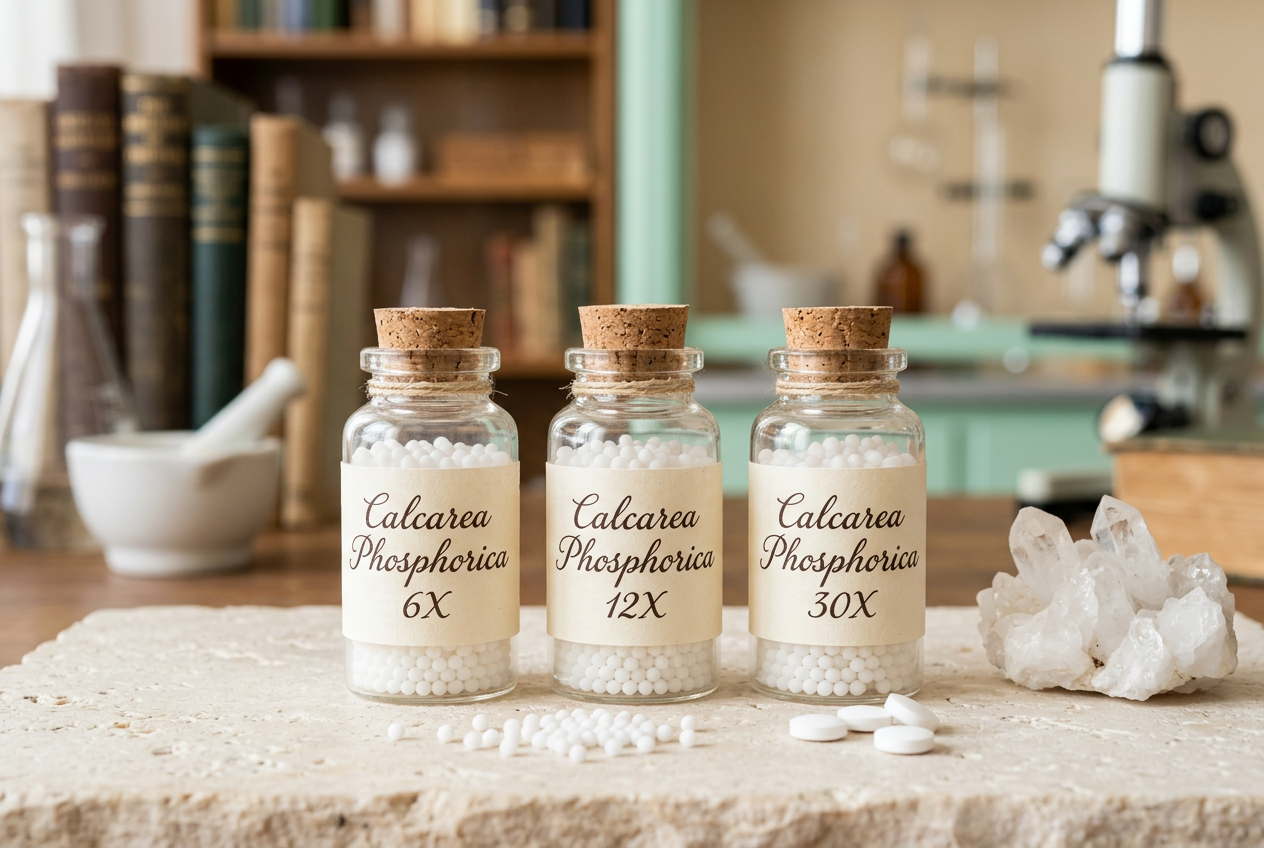
Available Preparations: 6X, 12X and 30X
Note on numbering: cell-salt numbering systems differ between manufacturers — Hyland’s, for example, numbers the salts in a different order from the classical Schüssler sequence. Always identify a preparation by its Latin name (e.g. Calcarea Sulphurica, Silicea), never by the number on the label alone.
Calcarea Phosphorica is available in several decimal potencies. The selection below offers four 6X preparations, four 12X preparations, and two 30X preparations.