WELLNESS & HEALTH · DR. HERMES, M.D.
Natrum Sulphuricum — The Salt of Water Elimination and the Liver
Of the twelve tissue remedies, Natrum Sulphuricum is the one that governs water. Every cell in the body produces water as it burns fuel; this salt is the workman that carries that water away. When it is scarce, the tissues become waterlogged, the liver stagnates, and a host of symptoms — bilious headaches, morning diarrhoea, asthma worsened by humidity — follow in train.

What Is Natrum Sulphuricum?
Natrum Sulphuricum — sodium sulphate, also known historically as Glauber’s salt (Sal Mirabile, “the wonderful salt”) — is the tenth of the twelve biochemic tissue remedies identified by Dr. Wilhelm Schüssler in the 1870s. Its chemical formula is Na₂SO₄, and it is found in the intercellular fluids of every tissue in the human body.
Its principal physiological role is the elimination of water produced by the oxidation of organic matter. Every metabolic reaction in the cell creates water as a by-product; that water must be moved out of the tissue and excreted. Natrum Sulphuricum is the molecule that performs this work. Without it, the intercellular spaces become waterlogged, metabolic waste accumulates, and the body’s water balance — what the older physicians called the “hydrogenoid constitution” — tips toward stagnation.
Among the twelve cell salts, Natrum Sulphuricum stands apart for its relationship to the liver and bile. It regulates the consistency of bile and pancreatic juice, and its deficiency is marked by a characteristic set of symptoms: biliousness, greenish-grey tongue coating, cutting pains over the liver, and a sensitivity to damp weather that borders on the meteorological.
Discovery in Human Ashes
When Schüssler set out to identify the inorganic constituents of the human body, he turned to the laboratory. The tissues of the body were reduced to ash and analysed. Twelve inorganic salts were found — no more, no less — and each was assigned a place in the cellular economy based on the tissue in which it predominated.
Natrum Sulphuricum was found in the intercellular fluids, the blood, and the liver. It was already known to chemistry as sodium sulphate, first isolated by the German chemist Johann Rudolph Glauber in 1658, who recognised its remarkable ability to draw water out of organic matter. Schüssler and his American disciple, Dr. George W. Carey, recognised that this same property made it indispensable to the living organism — not as a laxative, but as a molecular water-carrier at the cellular level.

Historical Doctrine: What Schüssler and Carey Taught
Dr. Wilhelm Schüssler placed Natrum Sulphuricum in the intercellular fluids and described its role as the eliminator of metabolic water. A deficiency, he taught, leads to a “hydrogenoid constitution” — a condition in which the body holds too much water and cannot clear the waste products dissolved in it.
Dr. George W. Carey, in The Biochemic System of Medicine (1894), amplified this with a striking chemical image:
One molecule of sodium sulphate has the power to take up and carry out of the organism two molecules of water.
Carey explained the mechanism of “ague” — intermittent fever — in strictly biochemical terms. He wrote:
When the blood becomes overcharged with water, of course, the various tissues of the body must suffer from lack of proper nourishment. This sets up a panic. Now, as the water-carriers are not present in sufficient quantities to throw out the excess in the natural way, nature does the next best thing — causes a spasm of the vascular, nervous and muscular systems, and thus, by violent effort, throws out the excess of water; hence the profuse perspiration which follows the chill. Where Natr. sulph. is not given to supply the workmen, and thus keep out an excess of water, the chill will recur in about forty-eight hours, simply because that much time is required to again overcharge the blood with water.
Carey summarised the salt’s broader function in the body:
Sodium sulphate works with water, keeps bile and pancreatic juice at normal consistency, regulates the supply of water in intercellular fluid, and eliminates the excess of water from the blood, when present in proper quantity.
The 19th-century biochemic physicians considered Natrum Sulphuricum the chief remedy for intermittent fever, bilious headaches, jaundice, asthma with greenish expectoration, and any condition aggravated by damp, rainy weather. The materia medica they compiled — based on decades of clinical observation — remains the most detailed portrait of this salt’s action in the human body.
What Natrum Sulphuricum Treats (The Indications)
The following indications are drawn from the clinical records of the Schüssler-Carey tradition, organised by system. The pattern that runs through all of them is dampness: symptoms that are worse in wet weather, marked by greenish or bilious discharges, and centred on the organs of water and bile — the liver, the lungs, and the bowel.
Head and Mind
- Violent, burning, throbbing headache on top of the skull; sick headache with vomiting of bile and bitter taste in the mouth.
- Vertigo and giddiness from excessive secretion of bile, with a dirty greenish-grey or greenish-brown coating on the back of the tongue.
- Irritability, despondency, and a tendency to discouragement — worse in the morning and in damp weather.
Digestive System and Liver
- Biliousness from oversecretion of bile; bitter taste in the mouth, constant hawking of thick, tenacious, greenish-white slime.
- Cutting pains in the region of the liver; enlargement and soreness of the liver, worse lying on the left side.
- Jaundice from vexation or oversecretion of bile, with yellow eyeballs and sallow skin.
- Vomiting of greenish, bitter water; bilious colic with bitter taste in the mouth.
- Diarrhoea with dark, greenish, bilious stools; loose morning stool, worse in cold, wet weather.
Respiratory System
- Asthma with violent attacks and copious greenish, purulent expectoration; asthma worse in damp, wet weather, often with loose morning evacuations.
- Bronchial catarrh with harsh breathing; all symptoms worse in damp, rainy weather.
Skin and Tissues
- Skin diseases with exudation of yellowish, watery fluid; eczema with bilious symptoms; moist, yellowish scales on the skin.
- Erysipelas — smooth, red, shiny swelling of the skin — when accompanied by bilious symptoms.
- Fistulous abscesses of long standing, discharging watery pus, surrounded by a dark, bluish border.
Modalities
- Worse: In damp, rainy weather; in the morning; from living in damp buildings or basements; from the use of water in any form.
- Better: In dry, warm atmosphere; in the evening.
Where Conventional Care Plateaus: When a Specific Intervention Reaches Its Limit
The following cases come from the ABUGALY Holistic-Medical Institute. The research group reviewed the clinical records of patients whose standard medical treatment reached a point of diminishing returns — where the intervention either failed to produce meaningful benefit or introduced harms that outweighed its effect. In each case, Dr. Hermes examined the clinical picture through the lens of the biochemic tissue salts and proposed a support protocol centred on Natrum Sulphuricum.
The single salt, and when a combination is warranted
The protocols in this article prescribe one tissue salt — Natrum Sulphuricum, the salt of this article — rather than a mixture. This is a deliberate choice of method: each tissue salt corrects one discrete biochemical function, and a single prescription is traceable — when the patient improves, we know precisely which salt carried the signal. For most plateau cases the single salt is therefore the correct first prescription: D12 for the chronic state, D6 for the acute overlay, D30 for the stalled or long-suppressed case, reviewed at weeks 4, 8 and 12. There is an honest exception, and the tradition itself recognises it: when a case presents with two or more distinct deficiencies at once, a multi-salt protocol is warranted — Schüssler himself combined the cell salts when the clinical picture demanded it. The single-salt prescription is therefore not a rule against combination; it is the discipline of starting with the dominant deficiency and adding a second salt only when the picture clearly requires it.
Case 1: Seasonal Influenza — When Antiviral Medication Offers Marginal Benefit
A 42-year-old primary school teacher, generally healthy, presented with fever (38.8 °C), myalgia, headache, dry cough, and fatigue on day two of influenza. She had been prescribed oseltamivir (Tamiflu) 75 mg twice daily, started 36 hours after fever onset. Since beginning the medication, she experienced nausea, two episodes of vomiting, and abdominal discomfort, with no appreciable change in the intensity of her flu symptoms.
The plateau: A Cochrane systematic review of full clinical study reports (Jefferson et al., 2014) demonstrated that oseltamivir shortens influenza symptoms by only half a day to one day in healthy adults, with no reduction in hospitalisation rates or complications such as pneumonia. The same review found significantly increased rates of nausea and vomiting compared to placebo. The benefit, in other words, is marginal, and the cost — in tolerability — is not negligible.
What Dr. Hermes Would Propose
Influenza with prominent nausea, vomiting, and bilious symptoms falls squarely within the Natrum Sulphuricum picture. The remedy is the classic biochemic support for the flu when the tongue shows a greenish-grey coating and the patient feels worse in the morning and in damp weather. Dr. Hermes would propose the following protocol:
Dr. Hermes Protocol — Influenza with Bilious Presentation
- Natrum Sulphuricum D6 — 1 tablet sublingual every 30–60 minutes on day one (up to 8 doses), then 1 tablet three times daily until symptoms resolve. The D6 potency addresses the acute febrile and catarrhal phase, supporting the elimination of metabolic water and bilious waste.
- Natrum Sulphuricum D12 — 1 tablet sublingual three times daily from day three onward, continued for one week after symptom resolution. The D12 potency supports the deeper constitutional shift as the patient moves from the acute inflammatory phase toward convalescence, guarding against the lingering fatigue and bilious tendency that follow a heavy viral illness.
- Take all tablets 15 minutes away from food or drink. If the patient is already on oseltamivir, the cell salts may be taken alongside (separated by at least two hours) — never discontinue prescribed medication without medical consultation.
Expected course: Fever resolution within 2–4 days; full recovery within 7–10 days, consistent with the natural course of influenza in a healthy adult, but without the drug-induced nausea. The Natrum Sulphuricum D6 addresses the acute bilious nausea and vomiting that oseltamivir may aggravate, while the D12 potency supports the deeper constitutional recovery and guards against post-influenza fatigue.
Case 2: Infant Bronchiolitis — When Routine Bronchodilators Do More Harm Than Good
A 5-month-old girl, weighing 6.8 kg, presented to the emergency department with her first episode of respiratory distress. She had three days of rhinorrhoea and cough followed by increased work of breathing. RSV antigen positive. A 2-year-old sibling had a “cold” at home. No prior wheezing, no atopy, no prematurity, no chronic disease. On examination: respiratory rate 52/min, SpO₂ 95% on room air, subcostal and intercostal retractions, widespread wheeze and fine crackles, nasal flaring. Mild-moderate distress. Standard treatment: nebulised salbutamol 2.5 mg as a “therapeutic trial” — a practice removed from the American Academy of Pediatrics guideline in 2014.
The plateau: The Cochrane systematic review (Gadomski & Scribani, 2014, CD001266, 30 trials, 1,992 infants) found that bronchodilators do not improve oxygen saturation in bronchiolitis (MD −0.43; 95% CI −0.92 to 0.06), do not reduce hospital admission (11.9% vs 15.9%; OR 0.75; 95% CI 0.46 to 1.21), and do not shorten hospital stay (MD 0.06; 95% CI −0.27 to 0.39). Adverse effects — tachycardia, tremors, transient desaturation — were documented. The AAP 2014 clinical practice guideline (Ralston et al., Pediatrics, e1474–e1502) explicitly states: do not administer bronchodilators to infants with bronchiolitis. The former “bronchodilator trial” was removed from the recommendation. Effective management is supportive: hydration, nasal suction, oxygen only if SpO₂ below 90%.
Note: This is a paediatric case. Biochemic doses and administration are for training illustration. Any treatment in an infant requires medical supervision.
What Dr. Hermes Would Propose
Bronchiolitis is a self-limiting viral illness of the small airways, characterised by catarrhal inflammation, oedema, and mucous accumulation. The biochemic approach does not attempt to replace supportive care — it complements it. Natrum Sulphuricum, as the salt of water elimination and mucosal regulation, is the logical tissue remedy for the catarrhal phase of bronchiolitis, where the airways are waterlogged with inflammatory exudate. Dr. Hermes would propose the following protocol alongside standard supportive care:
Dr. Hermes Protocol — Bronchiolitis Supportive Care
- Natrum Sulphuricum D6 — 1 tablet crushed and dissolved in a small amount of lukewarm water, given between feeds, twice daily for 7–10 days. The D6 potency addresses the acute catarrhal and inflammatory phase of the bronchiolar mucosa, supporting the clearance of intercellular fluid and exudate from the small airways.
- Natrum Sulphuricum D12 — 1 tablet dissolved, twice daily, from day 5 onward (or upon transition to the resolution phase), continued for 7 days. The D12 potency supports the deeper constitutional shift as the infant moves from the acute inflammatory phase toward recovery.
- All doses are given 15 minutes away from feeds. The tablet is crushed between two clean spoons and dissolved in 5–10 ml of lukewarm water; administer via a clean dropper or teaspoon.
- Supportive care is the foundation: fractionated oral hydration, saline nasal drops followed by gentle suction before feeds, antipyretics if fever, oxygen only if SpO₂ falls below 90%, smoke-free environment, and clear parental education on the expected 7–14 day self-limiting course.
- Red flags requiring urgent reassessment: SpO₂ below 90%, severe retractions, apnoea, lethargy, refusal to feed (dehydration risk), age under 3 months with fever, or worsening after day 3–4.
Expected course: Self-limiting resolution over 7–14 days, consistent with the natural history of viral bronchiolitis, but without the tachycardia, tremors, or transient desaturation that salbutamol can produce. The Natrum Sulphuricum supports mucosal clearance and reduces the waterlogged inflammatory state of the small airways. Parents are equipped with clear return criteria and an understanding that supportive care — not repeated nebulisation — is the evidence-based standard of care.
Clinical References for the Two Cases
- Jefferson T, Jones MA, Doshi P, et al. Neuraminidase inhibitors for preventing and treating influenza in adults and children. Cochrane Database of Systematic Reviews. 2014;(4):CD008965. PMID: 24718923.
- Jefferson T, Jones M, Doshi P, et al. Oseltamivir for influenza in adults and children: systematic review of clinical study reports and summary of regulatory comments. BMJ. 2014;348:g2545.
- Schüssler WH. Eine abgekürzte Therapie, gegründet auf Histologie und Cellular-Pathologie. 1873.
- Carey GW. The Biochemic System of Medicine. 1894.
- Boericke W, Dewey WA. The Twelve Tissue Remedies of Schüssler. 1898.
- Gadomski AM, Scribani MB. Bronchodilators for bronchiolitis. Cochrane Database of Systematic Reviews. 2014;(6):CD001266. PMID: 24937099.
- Ralston SL, Lieberthal AS, Meissner HC, et al. Clinical Practice Guideline: The Diagnosis, Management, and Prevention of Bronchiolitis. Pediatrics. 2014;134(5):e1474-e1502. PMID: 25349312.
Dosage and Potency
Natrum Sulphuricum is most commonly used in the 6X potency for acute conditions and the 12X or 30X for chronic or constitutional support. The 6X trituration delivers one-millionth of a grain of the salt per tablet — a dose consistent with Schüssler’s principle that the remedy should be just sufficient to restore the molecular balance, not so large as to overwhelm the cell.
- Acute conditions: 1 tablet of Natrum Sulphuricum 6X dissolved under the tongue every 30–60 minutes (up to 8 doses per day), reducing to three times daily as symptoms improve.
- Chronic or constitutional use: 1 tablet of Natrum Sulphuricum 12X or 30X, sublingual, three times daily, taken 15 minutes away from food or drink.
- Duration: Acute episodes: 3–7 days. Chronic support: 4–8 weeks, then reassess.
- The tablets are flavourless and dissolve quickly under the tongue. No water is needed.
Final Thoughts
Of all the damp-weather remedies in the biochemic system, Natrum Sulphuricum is the most reliable. The patient who says “I always feel worse when it rains” or “my head starts pounding before a storm” will often respond to this salt in a way that is hard to dismiss as coincidence. The tradition has been observing this pattern for over 150 years, and the clinical thread — greenish tongue, bilious stool, morning aggravation, damp-weather sensitivity — is remarkably consistent across cultures and decades.
At the same time, the two cases above illustrate a broader point: there are moments in medicine when the conventional tool reaches its limit. The antiviral that offers half a day of relief at the cost of nausea. The bronchodilator that delivers no benefit to an infant’s oxygen saturation while causing tachycardia and tremors. In those moments, the biochemic approach works alongside proper diagnosis — a way to support the body’s own water-regulating and eliminative functions while the natural course of the illness runs its length.
Natrum Sulphuricum is not a drug. It is a mineral salt that the body already knows how to use. When the body lacks it, the symptoms are unmistakable. When it is supplied, the body does what it has always done — clears the water, steadies the liver, and brings the system back to balance.
Dr. Hermes Trismegistus, M.D.
Doctorate in Schüssler Biochemic Medicine · Chief Medical Scholar, ABUGALY Holistic-Medical Institute
Books for Further Study
- Carey, George W. The Biochemic System of Medicine — Buy on Amazon
- Schüssler, Wilhelm H. An Abridged Therapy: Manual of Biochemic Treatment — Buy on Amazon
- Boericke & Dewey. The Twelve Tissue Remedies of Schüssler — Buy on Amazon
- Chapman, J. B. & Perry, E. T. The Biochemic Handbook — Buy on Amazon
- Carey, George W. The Chemistry of Human Life — Buy on Amazon
- Strbac, Lisa. Schuessler’s Tissue Salts Rediscovered — Buy on Amazon
- Hering, Constantine. The Twelve Tissue Remedies, of Dr. Schüssler, Recommended for Investigation (1874) — an early American examination of the tissue salts by the father of American homeopathy. Buy on Amazon
- Chapman, J. B., M.D. Dr. Schuessler’s Biochemistry — Buy on Amazon
- Roberts, Margaret. Tissue Salts for Healthy Living — Buy on Amazon
- Weintraub, Skye, N.D. Natural Healing with Cell Salts — Buy on Amazon
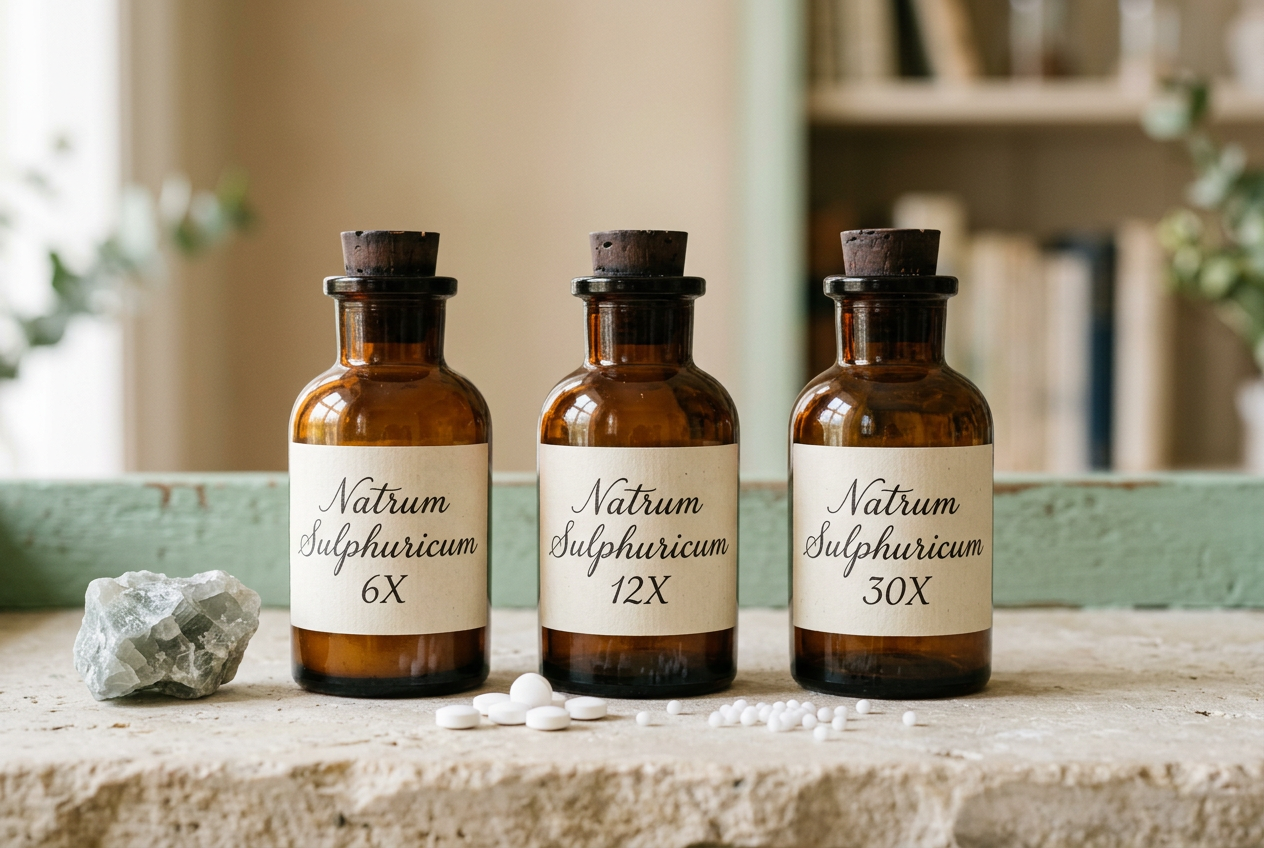
Available Preparations: 6X, 12X and 30X
Note on numbering: cell-salt numbering systems differ between manufacturers — Hyland’s, for example, numbers the salts in a different order from the classical Schüssler sequence. Always identify a preparation by its Latin name (e.g. Calcarea Sulphurica, Silicea), never by the number on the label alone.