WELLNESS & HEALTH · DR. HERMES, M.D.
Kalium Sulphuricum — The Salt of the Skin and the Later Stages
A source-led Wellness & Health examination of Kalium Sulphuricum in the Schüssler-Carey tradition: its historical materia medica, the clinical plateau cases, and the 6X, 12X and 30X preparations.
What Is Kalium Sulphuricum?
Kalium Sulphuricum — also written Kali sulph. or potassium sulphate (K₂SO₄) — is the sixth of the twelve inorganic cell salts identified by Dr. Wilhelm Schüssler in the 1870s and systematised by Dr. George W. Carey in the 1890s. It is the potassium salt of sulphuric acid, found naturally in the cells of the skin, mucous membranes, and epithelial tissues throughout the body.
In the Schüssler biochemical system, Kali sulph. is described as the salt that carries oxygen to the cells and regulates the function of the skin — particularly the opening and closing of the pores. The historical doctrine assigns it a distinctive signature: symptoms that are worse in a warm room and better in cool, open air, with a characteristic rise of temperature in the evening that does not subside until around midnight.
Modern biochemistry does not support the claim that potassium sulphate transports oxygen (that is the role of haemoglobin, an iron-containing protein). However, the clinical picture that Schüssler and Carey assembled — yellow discharges, evening fevers, dry skin, and shifting joint pains — remains a coherent and empirically derived therapeutic guide that has been used for more than 140 years.
Discovery in Human Ashes
Like all twelve tissue salts, Kalium Sulphuricum was identified through the analysis of the inorganic residue — the ash — left after the complete combustion of human tissue. Nineteenth-century chemists including Moleschott and Liebig analysed these ashes and found a consistent profile of twelve inorganic salts, among them potassium sulphate. Schüssler, building on Virchow’s cellular pathology, reasoned that since a substance is present in healthy tissue, its deficiency must produce disease, and its restoration in molecular form must restore health.
Carey’s 1894 text The Biochemic System of Medicine lists the sulphates as a distinct group: the sulphate of lime (Calcarea Sulphurica), the sulphate of soda (Natrum Sulphuricum), and the sulphate of potash (Kalium Sulphuricum). Each has a distinct sphere of action, and Kali sulph. is assigned to the later stages of inflammation, the skin, and the oxygen-carrying function of the blood.

Historical Doctrine: What Schüssler and Carey Taught
Dr. George W. Carey, M.D., in his 1894 text The Biochemic System of Medicine, devoted a full chapter to Kalium Sulphuricum. His explanation of the remedy’s action is grounded in the physiology of the skin and the role of oxygen in the body:
“The ‘suffocative feeling’ and ‘desire for cool air’ so characteristic of Kali sulph., and caused by a deficiency of this cell-salt, is explained thus: Without a proper amount of oil, the skin cannot carry on its functions; the pores shrivel up, the skin becomes dry, and the symptoms found in the repertory indicating Kali sulph. appear. In health the microscope reveals the fact that little jets of steam are constantly escaping from the seven million pores of the skin.”
Carey further explained the evening temperature rise that is the hallmark of this remedy:
“You may ask why a lack of proper balance of potassium sulphate molecules should cause a rise in temperature in the afternoon and which does not subside till about midnight. The reply would be that at such times the molecules of this salt are carriers of oxygen. It is well known that in sleep we breathe more deeply than when awake; therefore, the blood becomes charged with oxygen during sleep. The patient suffering from a lack of potassium sulphate will lie awake until exhausted, the system all the time calling for the deficient molecules of this salt. About midnight he falls asleep from exhaustion, and immediately deep respiration commences which supplies oxygen to the blood and opens the pores.”
According to the historical doctrine, Kali sulph. is indicated when the following clinical picture is present:
- Yellow or greenish-yellow, slimy discharges from any mucous membrane — the hallmark of the “third stage” of inflammation
- Yellow coating on the tongue — described as “slimy, sometimes with a whitish edge”
- Evening aggravation — symptoms worsen as the day progresses, with a temperature rise toward midnight
- Desire for cool, open air — the patient feels suffocated in a warm room
- Dry, harsh skin — lack of perspiration, with a tendency to scale on a sticky base
- Dandruff and scaling of the scalp — with sticky, yellowish secretions
- Wandering or shifting pains — rheumatic or neuralgic pains that move from one place to another
- Third stage of inflammation — when secretions have turned yellow and purulent, marking the transition from acute to subacute or chronic
Carey also recorded the modalities of this remedy with precision: “Aggravation in a heated room or in the evening. Always better in the cool, open air. Rise of temperature in the evening until midnight.”
What Kalium Sulphuricum Treats (The Indications)
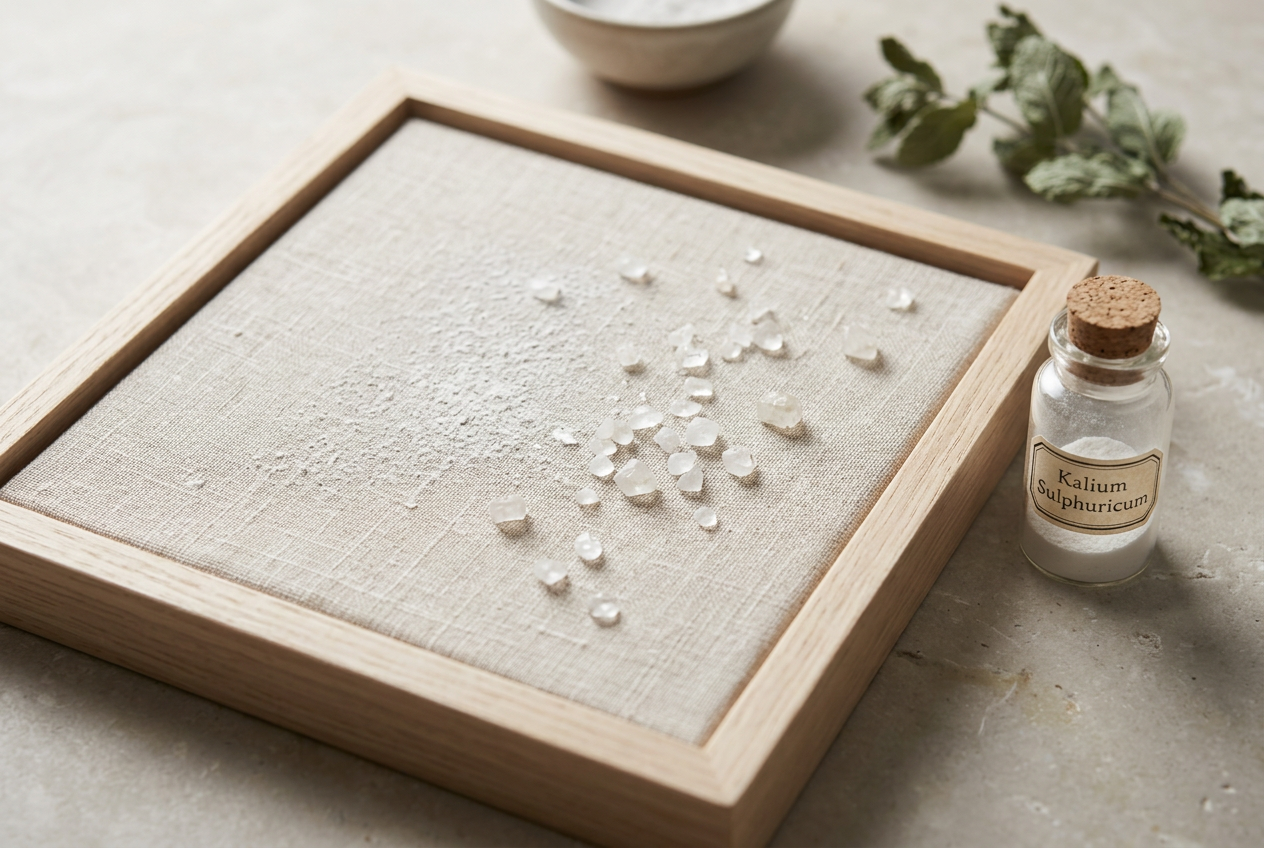
Based on the historical literature and clinical tradition, Kali sulph. is indicated for conditions involving the skin, mucous membranes, and the later, subacute or chronic phases of inflammation. The following indications are drawn from Carey’s materia medica and the broader Schüssler tradition.
Skin and Scalp
- Dandruff and scaling of the scalp, with sticky yellowish secretions
- Dry, hot, burning skin with lack of perspiration
- Eczema, especially when the eruption is suddenly suppressed
- Skin scaling freely on a sticky base; desquamation after eruptive fevers
- All sores on the skin exuding a thin, yellow, watery matter
- Epithelial cancer with characteristic discharge of thin, yellow, purulent matter
Respiratory System
- Bronchitis and consumption with yellow-greenish, slimy expectoration
- Cough with distinctly yellow sputa, worse in the evening or in a heated room; better in cool, open air
- Bronchial asthma with yellow expectoration and laboured breathing
- Pneumonia with yellow phlegm, great rattling and gurgling of mucus in the chest, suffocative feeling in a heated room
- Whooping cough with yellow, slimy expectoration
- Catarrhal conditions with discharge of slimy, yellow or watery greenish matter
Eyes, Ears, and Nose
- Discharge from the eyes or eyelids of yellow-greenish, serous matter or yellow, slimy secretions
- Yellow crusts on the eyelids; inflammation of the conjunctiva with characteristic exudations
- Earache with yellow, watery discharge; catarrh of the ear involving the eustachian tubes
- Catarrhal conditions of the nose with slimy, yellow or watery greenish matter
Digestive System
- Catarrh of the stomach with yellow, slimy tongue
- Dyspepsia with characteristic yellow coating on the tongue
- Colic pains in the stomach with slimy, yellow coating of the tongue
- Diarrhoea with yellow, slimy, purulent matter
- Typhoid and enteric fevers with evening aggravation and rise of temperature
Musculoskeletal and Nervous System
- Rheumatic pains in the joints that are disposed to wander or shift from one place to another
- Neuralgic or rheumatic pains in the back, limbs, or any part of the body, worse in the evening or in a warm room
- Fungoid inflammation of the joints
- Neuralgic pains with a tendency to shift from one place to another
Female Reproductive System
- Leucorrhoea with discharge of yellow, slimy, or greenish matter
- Menstruation too late and scanty, with fullness and weight in the abdomen
- Gonorrhoea with slimy, yellow, or greenish discharge
Where Conventional Care Plateaus: When a Specific Intervention Reaches Its Limit
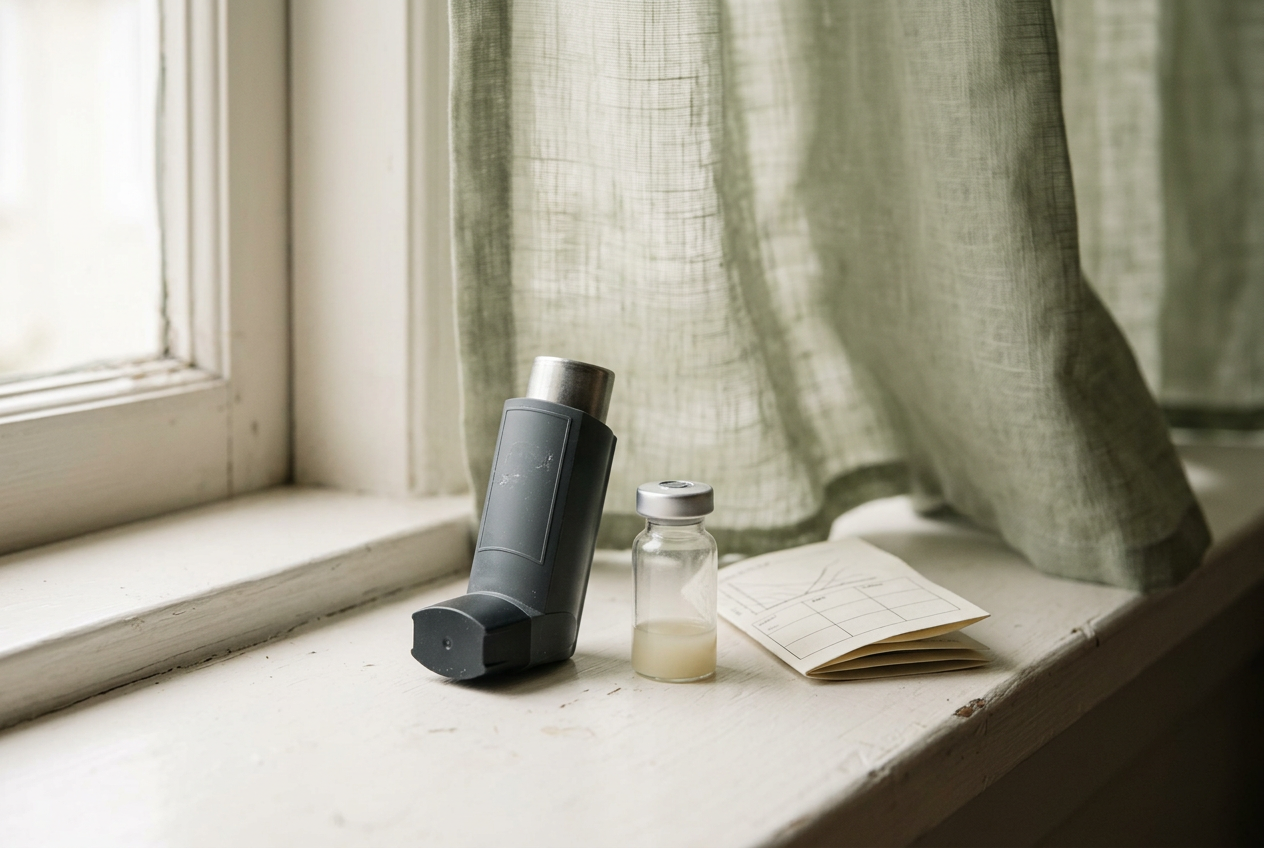
The following cases come from the ABUGALY Holistic-Medical Institute. The research group reviewed the evidence for two common interventions — one in respiratory medicine, one in rheumatology — where the risk-benefit equation has shifted decisively against routine use. In each case, the biochemic approach offers supportive tissue-level therapy without the documented harms of the plateaued intervention.
The single salt, and when a combination is warranted
The protocols in this article prescribe one tissue salt — Kalium Sulphuricum, the salt of this article — rather than a mixture. This is a deliberate choice of method, not an omission. The biochemic system is mineral-specific: each tissue salt corrects one discrete biochemical function, and one salt, correctly chosen and given time, removes the deficiency that holds the clinical picture in place. A single prescription is also traceable: when the patient improves, we know precisely which salt carried the signal. When several salts are given together, the signal is scattered, and neither the clinician nor the patient can tell which remedy was decisive.
For the great majority of plateau cases — where one dominant deficiency underlies the picture — the single salt is therefore the correct first prescription: D12 for the chronic state, D6 for the acute overlay, D30 for the stalled or long-suppressed case, reviewed at weeks 4, 8 and 12.
There is an honest exception, and the tradition itself recognises it. When a case presents with two or more distinct deficiencies at once — for example structural weakness together with nerve pain and acute inflammation — a multi-salt protocol is warranted. Schüssler himself combined the cell salts when the clinical picture demanded it. The single-salt prescription is therefore not a rule against combination; it is the discipline of starting with the dominant deficiency, observing the response, and adding a second salt only when the picture clearly requires it.
1. Stable COPD: Routine Inhaled Corticosteroids in a Non-Candidate
The research group reviewed a 64-year-old male former foundry worker with COPD diagnosed five years ago (FEV1 55% predicted, GOLD 2), a 38-pack-year smoking history (now ex-smoker), and only one mild exacerbation in the past two years. His blood eosinophil count was 120/µL — well below the threshold where inhaled corticosteroids (ICS) show benefit. Despite this, his general practitioner prescribed a fluticasone/salmeterol combination inhaler, following the practice of prescribing ICS to every stable COPD patient regardless of exacerbation history and eosinophil count — a pattern applied to up to 70% of patients in some registries.
The evidence against routine ICS in this profile is clear and consistent. The landmark TORCH trial (Calverley et al., New England Journal of Medicine, 2007) randomised 6,112 patients with COPD to salmeterol/fluticasone, salmeterol, fluticasone, or placebo over three years. All-cause mortality was 12.6% in the combination group versus 15.2% in the placebo group — a hazard ratio of 0.825 (95% CI 0.681–1.002, P = 0.052) that did not reach the prespecified level of significance. Meanwhile, pneumonia was reported as an adverse event in 19.6% of the combination group and 18.3% of the fluticasone group versus 12.3% of the placebo group (P < 0.001 for both).
A Cochrane systematic review by Kew and Seniukovich (2014) analysed 43 randomised controlled trials involving 31,397 patients. Fluticasone increased serious non-fatal pneumonia requiring hospital admission with an odds ratio of 1.78 (95% CI 1.50–2.12), corresponding to 18 more cases per 1,000 treated over 18 months. Budesonide carried an odds ratio of 1.62 (95% CI 1.00–2.62). Neither ICS significantly affected mortality. The GOLD 2023–2026 guidelines now restrict ICS to frequent exacerbators (≥2 moderate or ≥1 severe per year) and/or patients with blood eosinophils ≥300/µL.
What Dr. Hermes would propose: This patient does not meet the criteria for ICS therapy. The evidence-based foundation remains bronchodilators (LABA/LAMA), smoking cessation, vaccination, pulmonary rehabilitation, and treatment of comorbidities. To this, the biochemic protocol adds supportive minerals for the respiratory mucosa and drainage.
Dr. Hermes protocol — stable COPD, non-ICS candidate
- Kalium Sulphuricum D6: 1 tablet sublingually twice daily (morning and evening) for 8–12 weeks. Supports mucosal turnover and secretion drainage in the subacute phase of respiratory inflammation.
- Kalium Sulphuricum D30: 1 tablet sublingually once weekly for 6 weeks. Addresses the tissue-level suppression following long-term inhaled corticosteroid exposure, in accordance with the D30 indication for stalled cases with a history of suppression.
- How to take: allow each tablet to dissolve under the tongue, 15 minutes away from food, coffee, or strong flavours. Monitor exacerbation rate, FEV1, and symptom control at weeks 4, 8, and 12. Report worsening dyspnoea, fever, or purulent sputum to a physician promptly.
2. Osteoarthritis Pain: Rofecoxib (Vioxx) and the Cardiovascular Risk
The research group reviewed a 58-year-old female retail assistant with knee and hand osteoarthritis diagnosed in 2002. She had previously used traditional NSAIDs but developed dyspepsia, so in 2003 her doctor switched her to rofecoxib (Vioxx) 25 mg/day as a “gastroprotective” anti-inflammatory. She took it continuously for about a year. She was also hypertensive on medication. In September 2004, the drug was withdrawn worldwide after the APPROVe trial was stopped early for cardiovascular toxicity, and she learned of her exposure from the news.
The APPROVe trial (Bresalier et al., New England Journal of Medicine, 2005) randomised 2,586 patients with a history of colorectal adenoma to rofecoxib 25 mg/day or placebo. Confirmed thrombotic events occurred in 46 patients on rofecoxib versus 26 on placebo (1.50 versus 0.78 events per 100 patient-years), yielding a relative risk of 1.92 (95% CI 1.19–3.11, P = 0.008). The increased risk appeared after 18 months of treatment. The final extended analysis (Baron et al., The Lancet, 2008) confirmed the APTC combined endpoint (non-fatal myocardial infarction, non-fatal stroke, cardiovascular death) with a hazard ratio of 1.79 (95% CI 1.17–2.73, P = 0.006) — 59 events versus 34 — with risk persisting for about one year after stopping. Merck voluntarily withdrew the drug on 30 September 2004, and the FDA issued a Public Health Advisory.
What Dr. Hermes would propose: Rofecoxib has been withdrawn from the global market and must never be prescribed. The foundation of osteoarthritis management is mechanical and metabolic: regular aerobic and strengthening exercise, weight management if overweight, physiotherapy, and joint protection. These measures outperform most drugs on function. The biochemic protocol supports joint tissue and inflammatory terrain.
Dr. Hermes protocol — osteoarthritis pain (rofecoxib alternative)
- Kalium Sulphuricum D12: 1 tablet sublingually twice daily (morning and evening) for 8–12 weeks. The default plateau/chronic potency for sustained joint tissue support in degenerative osteoarthritis.
- Kalium Sulphuricum D6: 1 tablet sublingually twice daily for up to 7 days during acute inflammatory flares (warm, swollen joint). Addresses the acute/functional overlay of joint inflammation.
- How to take: allow the tablets to dissolve under the tongue, 15 minutes away from food, coffee, or strong flavours. Review pain, walking tolerance, swelling, and exercise adherence at weeks 4, 8, and 12. Any NSAID use should be at the lowest effective dose for the shortest possible time, under medical supervision, and with cardiovascular risk assessment.
Clinical References for the Two Cases
- Calverley PM, Anderson JA, Celli B, et al. Salmeterol and fluticasone propionate and survival in chronic obstructive pulmonary disease (TORCH trial). New England Journal of Medicine. 2007;356(8):775–789. PMID: 17314337.
- Kew KM, Seniukovich A. Inhaled steroids and risk of pneumonia for chronic obstructive pulmonary disease. Cochrane Database of Systematic Reviews. 2014;(3):CD010115. PMID: 24615270.
- Bresalier RS, Sandler RS, Quan H, et al. Cardiovascular events associated with rofecoxib in a colorectal adenoma chemoprevention trial (APPROVe trial). New England Journal of Medicine. 2005;352(11):1092–1102. PMID: 15713943.
- Baron JA, Sandler RS, Bresalier RS, et al. Cardiovascular events associated with rofecoxib: final analysis of the APPROVe trial. The Lancet. 2008;372(9651):1756–1764. PMID: 18922570.
- FDA Public Health Advisory on Vioxx (30 September 2004). Verified via FDA archive.
- Schüssler WH. Eine abgekürzte Therapie, gegründet auf Histologie und Cellular-Pathologie. 1873.
- Boericke W, Dewey WA. The Twelve Tissue Remedies of Schüssler. 1898.
Dosage and Potency
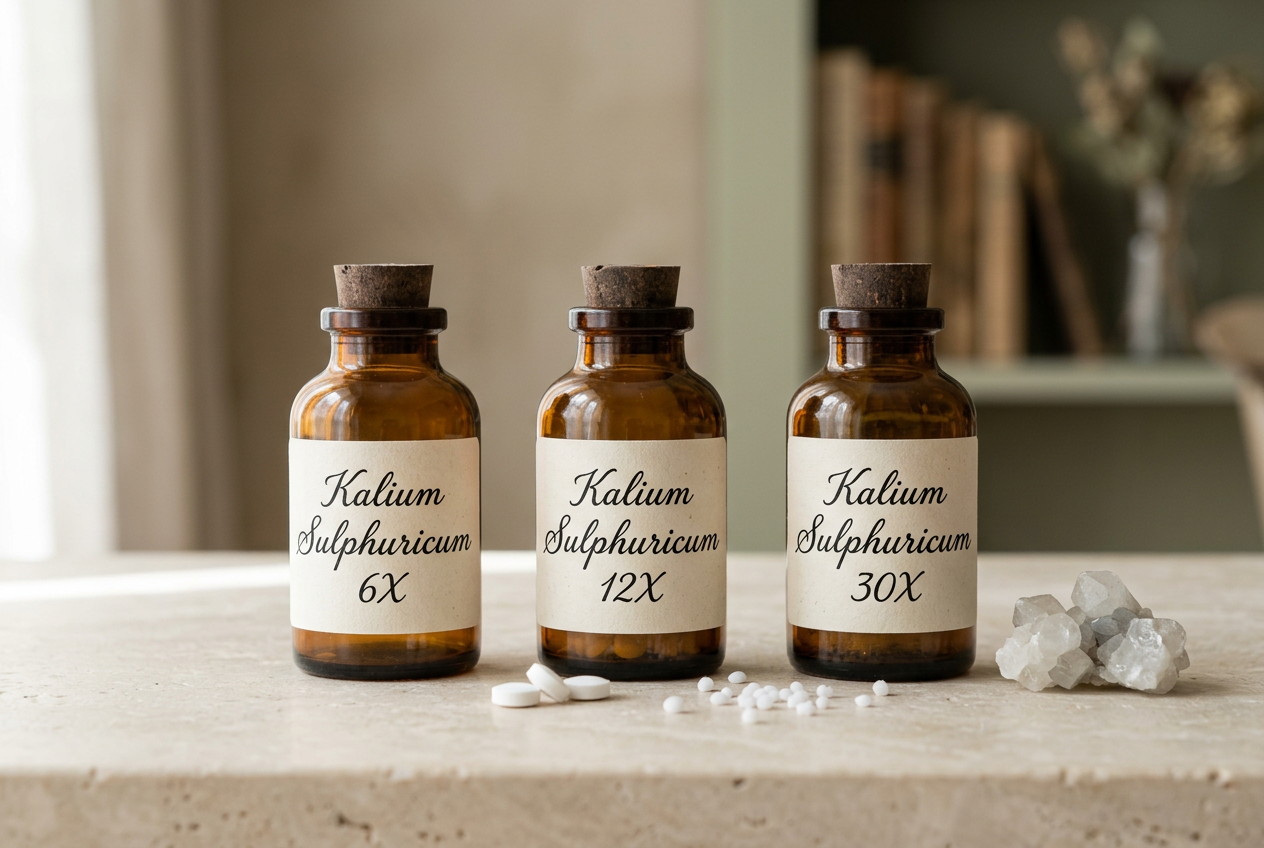
In the Biochemic tradition, Kalium Sulphuricum is used in low decimal potencies. The 6X is considered the standard general-use potency for chronic conditions, while the 12X and 30X are used when a deeper or longer-acting effect is sought. Carey himself recommended the sixth decimal trituration as the standard dose, noting that the molecules of this salt act as “carriers of oxygen” when administered in molecular form.
Acute conditions — particularly the evening fever and suffocative feeling — may respond to more frequent dosing (every 30–60 minutes for a few doses), while chronic conditions of the skin, respiratory tract, and joints are managed with 2–3 doses per day for 8–12 weeks.
As with all tissue salts, Kali sulph. is best taken away from strong flavours (coffee, mint, camphor) and allowed to dissolve under the tongue for optimal absorption through the oral mucosa. The tablets should be taken 15 minutes away from food or drink.
Final Thoughts
Kalium Sulphuricum occupies a distinctive place in the tissue salt materia medica: it is the remedy of the later stages of inflammation, the skin, and the characteristic evening temperature curve. While its historical mechanism — the direct carriage of oxygen by potassium sulphate molecules — does not align with modern molecular biology, the clinical picture that Schüssler and Carey assembled is coherent and internally consistent: yellow discharges, dry skin, evening fevers, shifting joint pains, and a desire for cool air.
This picture has guided practitioners for more than 140 years, and it remains a useful therapeutic map for those who work within the Biochemic tradition. In the modern context, the two plateau cases reviewed here — routine ICS in non-eosinophilic COPD and rofecoxib in osteoarthritis — illustrate the importance of knowing when a conventional intervention has reached its evidence-based limit. The Biochemic system does not replace modern diagnosis and management, but it offers a supportive tissue-level approach that carries no pneumonia signal and no cardiovascular risk.
In the words of Dr. Carey: “The ‘suffocative feeling’ and ‘desire for cool air’ so characteristic of Kali sulph., and caused by a deficiency of this cell-salt, is explained thus: Without a proper amount of oil, the skin cannot carry on its functions; the pores shrivel up, the skin becomes dry.” The remedy is a tissue food — a mineral that the body knows how to use, supplied in the molecular form that nature intended.
Dr. Hermes Trismegistus, M.D.
Doctorate in Schüssler Biochemic Medicine · Chief Medical Scholar, ABUGALY Holistic-Medical Institute
Books for Further Study
- George W. Carey, M.D. The Biochemic System of Medicine (1894) — the foundational English-language Schüssler-Carey text. Buy on Amazon →
- Wilhelm Heinrich Schüssler, M.D. An Abridged Therapy: Manual for the Biochemical Treatment of Disease — the original system in its 25th-edition English translation. Buy on Amazon →
- William Boericke & Willis A. Dewey. The Twelve Tissue Remedies of Schuessler — a classic materia-medica reference. Buy on Amazon →
- J. B. Chapman & Edward L. Perry. The Biochemic Handbook: How to Get Well and Keep Fit With Biochemic Tissue Salts — a later practical handbook. Buy on Amazon →
- George W. Carey, M.D. The Chemistry of Human Life — Carey’s broader biochemical work. Buy on Amazon →
- Lisa Strbac. Schuessler’s Tissue Salts Rediscovered: The 21st Century Guide to Self-Healing — a contemporary reader’s guide. Buy on Amazon →
Available Preparations: 6X, 12X and 30X
Note on numbering: cell-salt numbering systems differ between manufacturers — Hyland’s, for example, numbers the salts in a different order from the classical Schüssler sequence. Always identify a preparation by its Latin name (e.g. Calcarea Sulphurica, Silicea), never by the number on the label alone.
Kalium Sulphuricum is available in several decimal potencies. The selection below offers four 6X preparations, four 12X preparations, and two 30X preparations.